
Building Secure and Scalable Financial Systems: Lessons from the Banking Industry.
Industry Session: Building Financial Systems That Scale
Theme: Software Engineering Lessons from the Banking Industry.
The financial services industry has transformed dramatically over the last decade. Today, customers expect to transfer money, pay bills, access loans, and monitor their accounts from anywhere using mobile applications. Behind these seemingly simple interactions lies an incredibly sophisticated ecosystem of software, infrastructure, and security mechanisms.
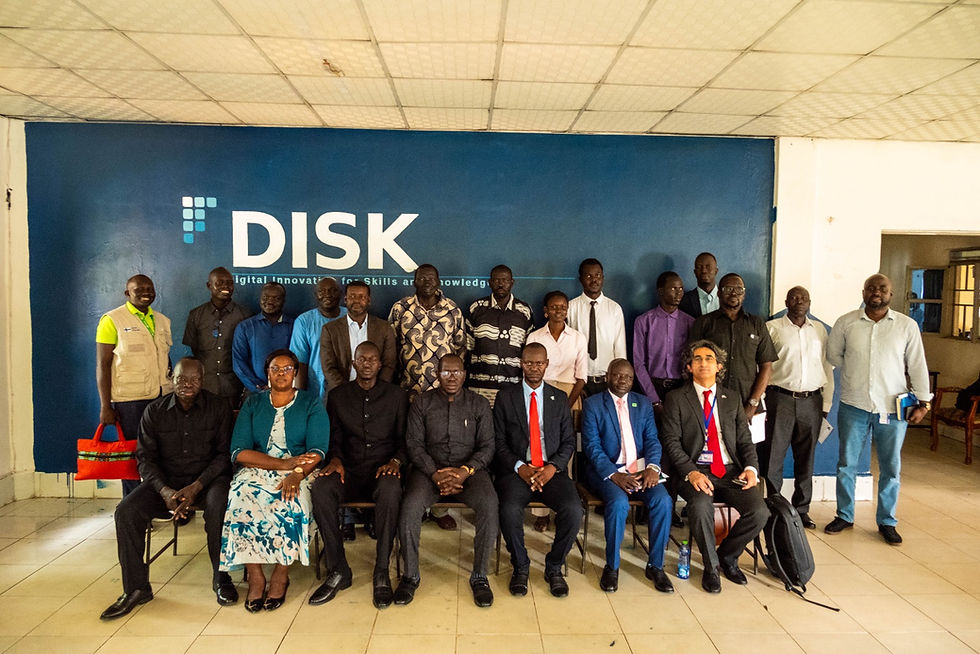
During the Industry Session on Software Engineering Lessons from the Banking Industry, participants were introduced to the engineering principles that power modern banking systems. The session, delivered by Mabil Deng, IT Applications Analyst at Stanbic Bank South Sudan, explored how secure financial software is designed, built, tested, and maintained.

Security Is the Foundation of Digital Banking
The session opened with a simple but powerful scenario:
Imagine logging into your banking application only to discover that your account balance has unexpectedly changed.
Using this example, the speaker reminded participants that customer trust is the most valuable asset a financial institution possesses.
"Rule number one; security. In order for that customer to have trust in that bank, the security of that application is the most fundamental."
He emphasized that software engineers must prioritize security before aesthetics or advanced features.
This message aligns with international best practice. The World Bank notes that as financial services become increasingly digital, the financial sector has become one of the world's primary targets for cyberattacks. Maintaining public trust therefore depends on strengthening cyber resilience across financial institutions.
Software Development Begins Before Coding
Participants were guided through the Software Development Life Cycle (SDLC), beginning with understanding business problems before moving into technical implementation.
The speaker explained that every banking application starts with business requirements that clearly define the customer problem. These requirements are then translated into technical designs by solution architects before designers create user interfaces and developers begin implementation.
He advised students to take this step seriously emphasizing:

"Documentation is very important... You're not cheating your lecturer; you're cheating yourself if you don't understand what problem you're solving."
This disciplined approach ensures that engineering teams solve the right problem rather than simply producing software.
Designing Secure Banking Architecture
The session introduced participants to a simplified banking architecture illustrating how customer requests travel through multiple security layers before reaching the core banking platform.
Instead of allowing customers to connect directly to internal banking systems, requests pass through:
Public-facing web services
Demilitarized Zones (DMZ)
Multiple firewalls
Authentication services
Application servers
Databases
Service buses
Core banking systems
The speaker reminded participants that complexity is intentional.
"Behind it, it looks simple here, but behind it is complex."
Each security layer exists to reduce opportunities for unauthorized access.
The National Institute of Standards and Technology (NIST) similarly notes that modern banking increasingly depends on secure APIs, layered authentication, and carefully designed security controls to reduce cyber risks in financial ecosystems.
Security Through Multiple Layers
Rather than relying on passwords alone, banking applications validate several forms of authentication before granting access.
During the session, participants learned how banks combine:
Passwords
PINs
One-Time Passwords (OTP)
Multi-factor authentication
API validation
Network segmentation
Encryption
The speaker emphasized that each layer makes unauthorized access significantly more difficult.

"You have to design something that cannot easily be penetrated but is simple at [the user's] end."
APIs Make Banking Systems Scalable
Modern banking platforms rarely allow external applications to communicate directly with core banking systems.
Instead, banks expose secure APIs that perform specific functions such as:
Balance inquiries
Funds transfers
Customer authentication
Payment processing
This architecture improves both scalability and security.
The World Bank notes that modern payment infrastructures increasingly depend on secure APIs and resilient payment systems to support digital economies and financial inclusion.
Good Software Is Built Through Collaboration
Participants also learned that large financial systems cannot be built by developers alone.
Successful delivery depends on collaboration between:
Business analysts
Solution architects
UI/UX designers
Front-end developers
Back-end developers
Database engineers
Cybersecurity specialists
Network engineers
Quality Assurance engineers
Each professional contributes specialized expertise throughout the software lifecycle.
Writing Code That Others Can Understand
The speaker encouraged aspiring developers to avoid unnecessarily complex code.
"Don't prove yourself. Don't do complex code. Keep it simple."
He further stressed the importance of documenting code.
"Comment your work well."
Readable, maintainable code reduces technical debt and allows future developers to improve systems without introducing unnecessary risks.
Protecting Data at Rest and in Transit
Protecting customer information extends beyond authentication.
Developers were encouraged to encrypt sensitive information stored in databases while also securing information transmitted across networks.
"Don't store your data as plain text."
The speaker explained that encrypted passwords, secure hashing, and modern transport protocols such as TLS significantly reduce opportunities for attackers.
Testing Is an Engineering Discipline
Before deployment, banking software undergoes extensive testing.
Participants learned about:
Functional testing
Regression testing
Vulnerability scanning
Code scanning
Penetration testing
Security assessments
The speaker highlighted the role of ethical hackers in identifying vulnerabilities before attackers can exploit them. International cybersecurity guidance recommends continuous vulnerability assessments, penetration testing, and secure API design as essential practices for financial institutions.
Agile Development Encourages Continuous Delivery
Rather than delaying releases until every feature is complete, Agile development encourages organizations to release working functionality while continuing development of remaining features. This allows customers to benefit sooner while engineering teams improve the product through successive versions.
Artificial Intelligence Is an Assistant, Not a Replacement
Artificial Intelligence also featured prominently during the discussion.
When asked whether AI could independently build banking software, the speaker acknowledged its usefulness while cautioning against overreliance.
"AI is real, but I think it is overrated."
He explained that AI can improve productivity, assist with coding, and accelerate development, but it cannot replace engineering judgement, security expertise, or business understanding. Developers should therefore use AI responsibly—as a tool that enhances human capability rather than replacing it.
Looking Beyond the Classroom
Perhaps the most inspiring message came when the speaker encouraged students to solve problems specific to their own communities. Whether building healthcare platforms, payment systems, logistics applications, or digital government services, software engineering should always address real societal challenges.
Conclusion
Building financial systems that scale requires much more than programming skills. It demands thoughtful planning, strong architecture, secure coding practices, rigorous testing, and continuous collaboration across multidisciplinary teams. For aspiring software engineers, the session demonstrated that successful banking software is built on trust. Every design decision; from documenting requirements to encrypting customer data contributes to protecting users and enabling reliable digital financial services. As banking continues its digital transformation, the engineers who combine technical excellence with security-first thinking will play a critical role in shaping the future of financial services.


Comments